Overview
- Start date28 September 2026
- Duration12 months
- DeliveryTaught modules 140 credits, Business Project 40 credits
- QualificationMSc
- Study typeFull-time
- CampusCranfield campus
Who is it for?
- Graduates with a desire to develop their knowledge and skills in management before seeking their first professional role.
- Early career professionals with a passion for business and aspirations to take their career to the next level.
- If you have three or more years of professional experience then the Transformation MBA is likely a better fit for your career aspirations.
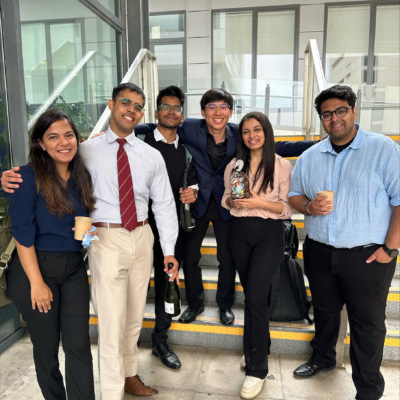
Class profile 2025/26
| Gender: |
Male: 64% - Female: 24% - Other: 8% |
| Age range: |
19 - 34 years |
| Nationality: | UK: 8% - International: 92% |
| Class size: |
25 |
Why this course?
This isn’t just another MSc
It’s your fast track to an impactful and purposeful career. Whether you want to lead, innovate, or create impact, this programme gives you the expertise, connections, and recognition to make it happen.
Top-ranked & globally recognised
Join one of the highest-ranked Management MSc programmes, backed by prestigious accreditations and global recognition.
Refine your sense of purpose with 4 specialisations
Discover your purpose, choose your focus area in Term 2 and tailor your degree to your career goals:
Management – Continue on this generalist management path.
Sustainability – Become a leader in sustainable business and ethical decision-making.
Entrepreneurship – Launch your own venture or drive innovation within a company.
Human Resource Management – Master the art of managing and developing talent.
Boost your employability and impact with a 3-month internship
Get hands-on experience in a corporate, SME, or growth-oriented startup company. Many students secure full-time roles where they intern!
Expand your horizons with a month-long study trip to Spain
Immerse yourself in a global learning experience while studying: Effective Cross-Cultural Management and Management Consulting.
Work in a team on a real business issue, competing against other teams to develop the best consulting solutions. This hands-on challenge will test your problem-solving, teamwork, and leadership skills.
A truly international experience
Join a diverse community of students, alumni and academics from 50+ countries. This global network will expand your perspectives and career opportunities.
Ready to elevate your career?
This programme isn’t just about learning—it’s about doing, experiencing, and succeeding. Whether you want to launch your own venture, lead in a multinational company, or create a sustainable impact, this is your moment.
We’ll help you discover your aspirations, passions, strengths, and weaknesses. Then, we’ll motivate you, challenge you to grow, and create an environment where you can explore your journey towards becoming the best version of yourself.
Apply now and make your future happen!
Cranfield University, promotes its commitment to diversity and inclusivity. This diversity not only creates a dynamic and enriching learning environment but also prepares us to be more effective global citizens with a better understanding and appreciation of different cultures and perspectives.
At Cranfield, we are not just studying for a degree but preparing ourselves for a successful and fulfilling career. The combination of diverse perspectives, supportive resources, and practical experiences has made my time at Cranfield University genuinely unforgettable, and I would highly recommend it to any student looking for a challenging and rewarding academic experience.
If I could sum up my year at Cranfield University in one word, it would be "transformative." From walking onto campus for the first time, filled with ambition, to reflecting on the journey today, I am in awe of the experiences, growth, and opportunities that shaped me into a more confident and purpose-driven individual.
This year has been a masterclass in leadership, resilience, and the power of teamwork. Every challenge taught me to think bigger, act boldly, and embrace growth.
Before joining Cranfield University, I was uncertain about which specific career path to pursue. However, the comprehensive experience I gained through the taught modules, the knowledge shared by esteemed professors, and the diverse perspectives of my peers provided me with the clarity I needed. By the end of my course, I was confident in my decision to build a career in sustainability.
Looking ahead, I'm excited about the opportunities in this field and am eager to apply the skills and knowledge I've acquired to make a positive impact on the world. Cranfield has equipped me with the tools I need to navigate the challenges of the future, and I’m grateful for the experiences and memories I’ve made along the way.
Having studied an exercise science degree, I'd never touched on economics, accounting and finance, strategic management, people management etc. In that sense, the course gave me exactly what I wanted, which was literacy and competence across the key areas of business, broad enough to prepare me for whatever career I chose to pursue, yet focused enough to go beyond the superficial and explore subjects in meaningful, interesting detail.
The practical emphasis at Cranfield also gave me tangible business experience, which made the transition into work appear seamless.
The course offers the chance to work on live case studies with companies and even includes an option to undertake an internship as part of your thesis. This hands-on structure strengthens core management fundamentals and brings theory to life in a way few other programmes do.
I am thrilled to have secured a role with TUI Airlines as a Procurement Strategy Officer, an opportunity made available through the School of Management. The process of securing this internship began right from the start of the academic year, with Cranfield’s Careers and Employability Team playing a vital role throughout.
I choose the Management MSc at Cranfield because it's designed for early management professionals with 2-3 years of work experience, has close links to the industry, and has a well-known legacy of delivering taught modules in a practical manner. Also, since it is an exclusive post-graduation university with an internationally diverse cohort and small class sizes, the impact of teaching is extremely profound.
My Cranfield degree was a perfect bridge for me to move from where I was, to where I am currently/where I will be in near future. It has transformed me as a person since I am more self-aware of my soft skills and hard skills, strengths, and weaknesses.





Informed by industry
An external advisory panel informs the design and development of the course, and comprises senior management practitioners, reinforcing its relevance to the modern business world. Many of our faculty have held senior positions in industry and continue to engage with industry through consultancy and teaching. They are also supported by a team of international visiting industry speakers and professors who bring the latest thinking and best practice into the classroom.
You will benefit from our close links with business through international case studies, a management consultancy simulation, visiting speakers providing an overview of the challenges they are facing and through the three-month internship project in the final term.
Course details
There are core modules in term 1, which every student will complete. You will then have the freedom to continue with a general Management route or choose a specialist study route: Sustainability, Entrepreneurship or Human Resource Management. Access to these enables you to tailor the course to suit your career plan. The ‘Effective Cross Cultural Management’ and ‘Consultancy Skills’ modules take place in Granada, Spain in term 3. This gives you the chance to fully immerse yourself in Spanish culture, while obtaining theoretical knowledge around cross-cultural management. The culmination of the learning process in term 4, is your opportunity to undertake an individual business project which is in-company or Cranfield led. The topics covered in this three-month internship project cover a broad range of areas.
September 2026-27 start structure
Course delivery
Taught modules 140 credits, Business Project 40 credits
Business Project
Between June and October, you will have the opportunity to undertake a major business project either as part of a three-month internship or in a more traditional Cranfield-led approach. Both pathways enable you to apply and extend the knowledge and skills you have learnt during the course and the choice of internships cover a broad range of subject areas with our partner companies. You will also be allocated a Business Project Supervisor who will help provide you advice and guidance during your journey.
Internship Business Project route
The internship placement will provide you with the opportunity to gain invaluable practical experience and apply what you have learnt during the course in an organisational environment. You will deepen your management knowledge and gain the potential to build a network of contacts.
The internship lasts three months, followed by a six-week ‘writing up’ period to complete your Business Project.
Internship Business Project case studies
Traditional Business Project route
Generally, a traditional business project can take the form of an Empirical Research where data is available or a Systematic Literature Review. Within this business project, you will also need to compile a personal development reflective self-assessment based on the ideas developed in the Business Project and taught programme experience and how it will help you develop in your chosen career.
Course modules
Compulsory modules
Economics of Markets, Competition and Strategy
| Module Leader |
|
|---|---|
| Aim |
To introduce the concepts and techniques associated with Managerial Economics, i.e., Microeconomics (e.g. market analysis, price theory, rationality) and Macroeconomics (e.g. inflation, exchange rates and interest rates). |
| Syllabus |
The initial few sessions are spent on discussion of the main concepts that serve the basis for the understanding of Economics and the business environment. There is extensive discussion about the properties associated with different market structures and levels of competition. The students are then introduced to important elements regarding the interplay between management and the firm’s objectives and this is followed by a comprehensive discussion about business strategy that builds on what was previously delivered and, as a consequence, the investigation of economic implications for a firm. One important element of the corporate strategy relates to decisions about pricing, and this is discussed in great detail. Finally, the remaining sessions are devoted to discussion of the concepts and ideas in macroeconomics which have a direct relevance to organisations. |
| Intended learning outcomes |
On successful completion of this module, you should be able to:
|
Organisational Behaviour: Application
| Module Leader |
|
|---|---|
| Aim |
Organisations are run by and for people, and the success or failure of an organisation depends on the people in that organisation. It is rarely an absence of planning that causes organisational difficulties; rather it is the failure of management in understanding and managing complex personal and interpersonal systems that can lead to significant problems. Similarly, an acute and critical understanding of these dynamic relationships can lead to profound and enduring success and benefit for the individual, the team, the organisation and wider society. Success in management, particularly at senior levels in organisations, depends on understanding organisations, the people in them and the relationship between the internal and external environments within which they exist, and in ensuring that they work effectively. In this module students will be introduced to various aspects of people and organisations. This module combines models, theories and ideas from organisational behaviour, psychology, and sociology in order to provide students with a basic understanding in recognising, understanding and utilising what has been termed the "human factor" in organisations; including ways of conceptualising organisations and how people behave within them. We shall consider the impact of the external environment, and address notions of organisational change. This module is necessarily an introduction; further suggestions of reading and of consequent activities will be provided. It may also be that students will wish to undertake a project in this area; several of the faculty involved will be pleased to discuss this with you. |
| Syllabus |
|
| Intended learning outcomes |
|
Data Analytics and AI for Managers
| Module Leader |
|
|---|---|
| Aim |
|
| Syllabus |
The principles of business analytics: |
| Intended learning outcomes |
On successful completion of this module, you will be able to:
|
People Management and Leadership
| Module Leader |
|
|---|---|
| Aim |
This module is concerned with managing the organisation’s key resource – the people who work for it. It aims to help learners understand how effective people management can contribute to develop and sustain organisations. The module aims to develop an insight into the complexities of managing people in a changing environment. The focus of the module is to help learners understand the relationship between people management and organisational performance, including managerial roles, and sustainability challenges, emphasising the crucial links and responsibilities of line managers. The module will provide an introduction to the main activities associated with resourcing, developing and day–to-day management of people in organisations. It is not the intention of the module to develop human resource management specialists, but rather to provide a general introduction to the people management issues that concern all managers. The module will draw on key academic contributions in the broad field of people management, including current research being carried out by faculty in the School of Management. Throughout the module, sessions will be highly interactive in order to develop critical insight and core skills in the people management field. |
| Syllabus |
|
| Intended learning outcomes |
|
Professional Practice and Career Readiness
| Module Leader |
|
|---|---|
| Aim |
This module recognises that professional effectiveness is not limited to individual performance. Working with others - leading teams, influencing stakeholders, navigating conflict and building collaborative relationships across diverse cultural and organisational contexts - is at the heart of what employers expect of managers, analysts, finance professionals, supply chain leaders, procurement specialists and marketers. The module accordingly gives substantial attention to leadership development, emotional intelligence, negotiation and the interpersonal dynamics of professional life. Storytelling - the ability to structure and deliver a compelling professional narrative - is treated as a distinct and teachable skill that connects self-awareness to effective communication in interviews, pitches and stakeholder interactions alike. |
| Syllabus |
|
| Intended learning outcomes |
|
Strategic Management
| Module Leader |
|
|---|---|
| Aim |
Strategic Management is concerned with the future direction of the organisation and finding and sustaining best fit with its environment - determining its scope, establishing objectives and formulating strategies to achieve them. In order to do this, strategic thinking must understand the needs and priorities of the organisation, to anticipate and react to changes in the organisation's environment, to identify and harness the organisation’s most advantageous resources and capabilities, and to account for all stakeholders who are impacted by the organisation's practices. Incorporating a systems thinking approach to organisations and their environments, this module emphasizes the strategic significance of societal contexts and the broader ecological sphere. Strategic Management is a dynamic, interdisciplinary, thought-provoking subject and activity. It is part science and part art. It is both analytic and creative. There is no one best way to approach strategy, no 'one size fits all'. Context is king. We learn how to develop bespoke strategies befitting different forms of organisation across various contexts. The aim of this module is to build confidence in undertaking these strategic activities, so that distinctive Cranfield learners can form and communicate a credible and believable view of an organisation’s future direction. |
| Syllabus |
|
| Intended learning outcomes |
|
Business Finance for Decision Makers
| Module Leader |
|
|---|---|
| Aim |
The aim of the Accounting and Finance module is to introduce a number of traditional and contemporary accounting approaches that will increase the visibility of financial information and support management decision making. It aims to integrate basic financial knowledge in the management of a business organisation. |
| Syllabus |
|
| Intended learning outcomes |
On successful completion of this module you should be able to:
|
Research Methods for Business Impact
| Module Leader |
|
|---|---|
| Aim |
The module is primarily designed to provide you with an understanding of what is required to undertake successful academic studies and to conduct research in business contexts considering that todays’ managers: Therefore, understanding the process of producing evidence will ensure you have the core skills to inform management decisions. |
| Syllabus |
Introduction to evidence-based management Conducting research in management Understanding and evaluating qualitative research methods Understanding and evaluating quantitative research methods |
| Intended learning outcomes |
On successful completion of this module, you should be able to:
|
Effective Cross-Cultural Management (Study Tour)
| Module Leader |
|
|---|---|
| Aim |
Many people work internationally and/or in highly diverse settings in multicultural teams. Leaders who can understand their own cultural values, norms and preference, who are able to recognise and interact successfully with people from other cultures have an advantage in our globalised world. In short, cultural understanding, adaptability and intelligence are highly advantageous. This module explores management and leadership issues arising from working with different cultures in a domestic or international context and enables students to more successfully manage a range of cross-cultural challenges. It does so using a blend of practical examples, research-based theories and experiential teaching methods. Watch video: An introduction to the Effective Cross-Cultural Management module |
| Syllabus |
This module has the following elements: |
| Intended learning outcomes |
|

Management Consulting (Study Tour)
| Module Leader |
|
|---|---|
| Aim |
This is an integrative module allowing students to develop management consulting skills and apply their learning in a practical manner. It will use the insights generated through ECC to explore the cultural nuances of the company/national culture relevant to the case company. Students will work in their consulting teams and will role-play as a management consulting team, competing against the other teams. All teams will address the same business challenge: a genuine business issue in a particular company. Students will have a set of taught sessions on the ‘art and craft’ of management consulting. In parallel, they will work with their consulting teams to address the case company business challenge. They will engage with the problem; gather the relevant data; use appropriate tools/frameworks and propose innovative, pragmatic and achievable solutions. |
| Syllabus |
This module comprises conceptual knowledge about the foundations of management consulting and practical knowledge developed through a consulting project for a real organisation which every year is chosen by the module leader. The module includes teaching and feedback sessions focused on the following: |
| Intended learning outcomes |
|
Study routes
In term 2, there is a choice of study routes: Management, Sustainability, Entrepreneurship and Human Resource Management.
Management study route
Strategic Digital Marketing
| Module Leader |
|
|---|---|
| Aim |
A crucial competence for marketers is marketing strategy: in simple terms, analysing how the target market divides into segments, which of these segments are key targets for the firm, what the firm’s value proposition to each segment is, and what financial results can be expected over a planning period of typically 1-3 years. This module teaches Cranfield’s world-leading step-by-step process for developing such a marketing strategy and documenting it in a marketing plan. |
| Syllabus |
|
| Intended learning outcomes |
On completing this module, the following outcomes will have been achieved, and students will be able to: Understand the evolution and role of marketing and be able to evaluate the characteristics of a customer-centric organization. Select and critically reflect on a series of marketing strategy tools and techniques which are applied to business opportunities and problems. Have a critical understanding of the construction and evaluation of a strategic marketing plan. |
Entrepreneurship: Building High Potential Ventures
| Module Leader |
|
|---|---|
| Aim |
The aim of the course is to provide students with knowledge and skills relevant for the management of new ventures across the entrepreneurial life cycle. The course will also act to prepare students who want to undertake an internship for a new venture as part of their thesis on the MSc in Management. |
Sustainability in Management
| Aim |
Global sustainability challenges are shaping the way organisations operate in the 21st century. Businesses and organisations are under increasing pressure from multiple stakeholders (for e.g. shareholders, customers, employees, society) to manage their positive and negative impacts with clear responsibility and strategic intent. Leading organisations are choosing to respond to these challenges by generating sustainable value propositions to ultimately drive competitive advantage. For many this has meant re-engaging at the level of purpose and re-addressing their role in wider society and for human well-being. This module outlines the major sustainability challenges and explores the capabilities organisations require to respond positively to them. It will engage students in gaining a better understanding of how actions by different organisations can be best configured to promote responsible and sustainable strategies. In doing so, it will demand students (as future managers and leaders) to reflect on the long-standing debates like whether or not ‘the business of business, is still business? |
|---|
Managing Operations
| Module Leader |
|
|---|---|
| Aim |
To provide the participant with an understanding of the Operations Management task and its contribution to organisational competitiveness. An introduction to Managing Operations |
| Syllabus |
|
| Intended learning outcomes |
|
Sustainability study route
Strategic Digital Marketing
| Module Leader |
|
|---|---|
| Aim |
A crucial competence for marketers is marketing strategy: in simple terms, analysing how the target market divides into segments, which of these segments are key targets for the firm, what the firm’s value proposition to each segment is, and what financial results can be expected over a planning period of typically 1-3 years. This module teaches Cranfield’s world-leading step-by-step process for developing such a marketing strategy and documenting it in a marketing plan. |
| Syllabus |
|
| Intended learning outcomes |
On completing this module, the following outcomes will have been achieved, and students will be able to: Understand the evolution and role of marketing and be able to evaluate the characteristics of a customer-centric organization. Select and critically reflect on a series of marketing strategy tools and techniques which are applied to business opportunities and problems. Have a critical understanding of the construction and evaluation of a strategic marketing plan. |
Sustainability in Management
| Aim |
Global sustainability challenges are shaping the way organisations operate in the 21st century. Businesses and organisations are under increasing pressure from multiple stakeholders (for e.g. shareholders, customers, employees, society) to manage their positive and negative impacts with clear responsibility and strategic intent. Leading organisations are choosing to respond to these challenges by generating sustainable value propositions to ultimately drive competitive advantage. For many this has meant re-engaging at the level of purpose and re-addressing their role in wider society and for human well-being. This module outlines the major sustainability challenges and explores the capabilities organisations require to respond positively to them. It will engage students in gaining a better understanding of how actions by different organisations can be best configured to promote responsible and sustainable strategies. In doing so, it will demand students (as future managers and leaders) to reflect on the long-standing debates like whether or not ‘the business of business, is still business? |
|---|
Green and Sustainable Finance
| Module Leader |
|
|---|---|
| Aim |
The aim of the Green and Sustainable Finance module is to develop students’ awareness of the ways in which finance and financial services are increasingly integrated into and central to Environmental, Social and Governance (ESG) criteria and in supporting sustainable economic growth. In particular, the module is designed to deliver insight into the role finance can and must play in the transition to a more sustainable economy as well as of the wider national and international regulatory and enabling frameworks. |
| Syllabus |
|
| Intended learning outcomes |
|
Applied Science and Technology for Environmental Sustainability
| Module Leader |
|
|---|---|
| Aim |
Environmental sustainability is a main board issue. General managers need to be able to navigate this agenda broadly, and their internal specialist officers, whether in regulatory affairs, sustainability, CSR, risk governance, procurement or finance may need to become intelligent customers for professional advice on environmental matters or experts in their own right. This module is a postgraduate ‘primer’ for the aspiring general manager. It seeks to equip you with: - The business case for reducing environmental impacts – termed sustainability, as viewed through various lenses including resource security, risk management, regulatory compliance, and supply chain management. An update of current sustainability paradigms, including design for sustainability, the ‘circular economy’, smarter environmental regulation, sustainable manufacturing and their implications for business. |
| Intended learning outcomes |
|
Entrepreneurship study route
Strategic Digital Marketing
| Module Leader |
|
|---|---|
| Aim |
A crucial competence for marketers is marketing strategy: in simple terms, analysing how the target market divides into segments, which of these segments are key targets for the firm, what the firm’s value proposition to each segment is, and what financial results can be expected over a planning period of typically 1-3 years. This module teaches Cranfield’s world-leading step-by-step process for developing such a marketing strategy and documenting it in a marketing plan. |
| Syllabus |
|
| Intended learning outcomes |
On completing this module, the following outcomes will have been achieved, and students will be able to: Understand the evolution and role of marketing and be able to evaluate the characteristics of a customer-centric organization. Select and critically reflect on a series of marketing strategy tools and techniques which are applied to business opportunities and problems. Have a critical understanding of the construction and evaluation of a strategic marketing plan. |
Entrepreneurship: Building High Potential Ventures
| Module Leader |
|
|---|---|
| Aim |
The aim of the course is to provide students with knowledge and skills relevant for the management of new ventures across the entrepreneurial life cycle. The course will also act to prepare students who want to undertake an internship for a new venture as part of their thesis on the MSc in Management. |
Raising Venture Funding
| Aim |
The aim of this elective is to familiarise students with entrepreneurial finance principles. It provides students with an overview of the different sources of funding available across the entrepreneurial life cycle. It equips them with clear guidelines on which type should be adopted at which stage. During class, we will cover debt and equity funding, as well as new emerging alternatives such as crowdfunding. Moreover, students will learn a variety of techniques for early-stage business valuation, and how to prepare a term sheet. This is a very practical module, enabling students to assess business plans and develop a funding strategy for an entrepreneurial venture. During and between classes students will be required to research information and complete application exercises. |
|---|
Leading Family Businesses
| Aim |
Family businesses make numerous, critical contributions to the economy and to family well-being both in terms of money income and such intangibles as time, flexibility, control, and personal expertise - if they work. When they don't, family businesses can be difficult to manage, painful experiences at best. The path to success for any business can follow many routes. Family businesses add the complexities of family life to business challenges, expanding the range of issues, personalities, needs and potential solutions for every decision. Knowing something about family types, communication patterns, managerial styles and the amount of support members can expect from their families may be as important to beginning entrepreneurs as knowing how to reach a market or managing cash flow. The course addresses aspects of managing an established family business, on a day-to-day basis and planning for succession to the next generation: values, life cycles, growth strategies, succession, conflict resolution, governance and cultural change. Family business issues of new companies are a small part of the course content; because there are other modules in the MSc Entrepreneurship and Management programme that concern entrepreneurship and small business management, this module will enable students to run their family businesses in an entrepreneurial manner. |
|---|
Human Resource Management study route
Talent Sourcing and Career Management
| Module Leader |
|
|---|---|
| Aim |
In essence this module is concerned with how organizations attract, select and manage the careers of ‘talent’ and how HR professionals can conduct career peer-coaching. It aims to help participants understand how effective talent sourcing and career management can contribute to developing and sustaining organisations. The focus of the module will be concerned with helping participants understand the role of sourcing and career management in ensuring that organizations acquire the ‘talent’ they need to be successful. In addition, it enables participants to acquire and practice career coaching skills. The module aims to develop an insight into the complexities of sourcing talent and managing careers in a changing environment. The module will draw on key academic contributions in the broad field of talent and career management, including current research being carried out by faculty in the School of Management. View video: An introduction to the Talent Sourcing and Career Management module |
Performance Management and Rewards
| Module Leader |
|
|---|---|
| Aim |
The enabling of people’s motivation and performance at work is a critical function of managers and HR professionals. Organisations invest a lot of money, time and energy developing policies, procedures and interventions that influence what people do and how well they do it. Performance management is often associated with performance appraisals, but it also includes other practices such as goal setting, performance measuring, performance reviewing, performance development and rewards. This module aims to provide students with the knowledge and skills to be able to critically assess the role, value and consequences of people performance management and reward systems. |
Employment Relations and Engagement
| Aim |
For many organisations the nature and quality of the relationships it has with its people is crucial to success. The aim of this module is to explore the nature of this relationship, the factors which influence how it operates and how it can be managed effectively to maximise mutual benefit. The module will also examine relevant legislation and policy recommendations. |
|---|
Contemporary Approaches to Human Resource Management
| Module Leader |
|
|---|---|
| Aim |
The module will review and analyse the current and future challenges that organisations face in line with the latest changes/trends affecting the workplace. The module will discuss the crucial role played by HR in supporting organisations towards the achievement of their strategic goals and the importance of leveraging on the latest technological developments to adopt more efficient people management approaches. The module will draw on key contributions in the field of e-HRM and new ways of organising, including current research being carried out by faculty in the School of Management. |
Elective modules
Regardless of the study route chosen in term 2, one of the modules from the following must be taken as part of this Management MSc.
Internship Business Project Route
| Module Leader |
|
|---|---|
| Aim |
The aim of the project module is to train students to undertake a major company-based project that is informed by a literature search, evaluation, integration and application to a specified topic with organisational relevance. In addition, this gives students hands-on experience of management issues and encourages them to explore managerial challenges in-depth and to develop valuable insights and/or recommendations. Overall, this part aims to demonstrate an ability to gather evidence in relation to a management challenge, to apply management knowledge, skills, and analytical abilities to real-world problems, to critically synthesise data and to develop recommendations. Specific topics may be agreed between students and supervisors based on the project brief that is initially suggested by the internship organisation. Students and their supervisors will jointly determine the project topic(s). Generic questions in relation to the student’s Part 1 topic and the internship may include:
- How does the student’s work support value creation? What are the key current challenges that the student’s work entails? What recommendations can the student draw up to improve the situation? Towards the end of the internship or after completing the internship the student engages in a self-assessment activity. This section concentrates on reflective learning and includes individual self-reflection. It aims to demonstrate an ability to reflect on the student’s own progress and to develop ideas how to improve the student’s personal skills, abilities and management insights. In addition, students have the chance to improve their career planning. In this section, students are expected to: - Provide background to the Internship Experience (Present a clear and brief description of the internship experience. The description could be based on a number of critical incidents that took place during the internship period). |
Traditional Business Project Route
| Module Leader |
|
|---|---|
| Aim |
The aim of the project is for the student to demonstrate an ability to undertake a substantial piece of independent work wherein the student sets the research objective, determines how it is best researched, plans and executes an appropriate method, determines the findings and discusses them in the context of a theoretical framework relevant to the topic. |
Keeping our courses up-to-date and current requires constant innovation and change. The modules we offer reflect the needs of business and industry and the research interests of our staff. As a result, they may change or be withdrawn due to research developments, legislation changes or for a variety of other reasons. Changes may also be designed to improve the student learning experience or to respond to feedback from students, external examiners, accreditation bodies and industrial advisory panels.
To give you a taster, we have detailed the compulsory and elective (where applicable) modules which are currently affiliated with this course. All modules are indicative only and may be subject to change for your year of entry.
Teaching team
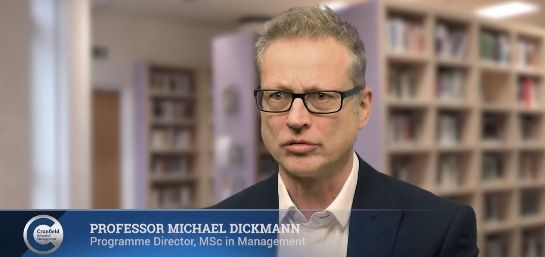
Our faculty are committed to improving the practice of management. As leaders in their field with hands-on business experience, they understand the challenges of putting theory into practice. Their experience is reinforced by close links with organisations through consultancy projects, teaching on executive development programmes and sponsored research. This ensures that what you learn at Cranfield is always current and cutting edge. The Course Director for this course is Professor Michael Dickmann.


















Accreditation
The Cranfield Management MSc is a Chartered Management Institute (CMI) dual accreditation degree. This provides the opportunity to stand out from other management graduates by achieving the CMI’s professional management qualification alongside your Cranfield degree.
The CMI is the only chartered professional body in the UK dedicated to promoting the highest standards in management and leadership excellence. It is the only organisation awarding Chartered Manager status, and has a 100,000+ membership.

Your career
The Careers and Employability Service offers a comprehensive service to help you develop a set of career management skills that will remain with you throughout your career.
During your course you will receive support and guidance to help you plan an effective strategy for your personal and professional development, whether you are looking to secure your first management role, or wanting take your career to the next level.
Cranfield graduates are highly valued in the job market and aim for careers including consultancy, project management and business operations. Our Management MSc graduates have secured jobs with a diverse range of companies including Virgin Active Group, Whirlpool, BNP Paribas, IKEA, Skanska, Withers Worldwide, Grant Thornton, Vodaphone and Ericsson. Their roles have included Project Manager, Senior Business Analyst, Consultancy Analyst and Sales Trader.
How to apply
To apply you will need to register to use our online system. Once you have set up an account you will be able to create, save and amend your application form before submitting it.
Application deadlines
There is a high demand for places on our courses and we recommend you submit your application as early as possible.
Entry for September 2026
- Most international and European applicants, who require a visa to study in the UK, must apply by Monday 13 July 2026.
- Nationals of Bangladesh, Ghana, India, Nigeria and Pakistan, who must complete qualification verification, must apply by Monday 29 June 2026.
- UK and Irish applicants must apply by Monday 21 September 2026.
Once your online application has been submitted together with your supporting documentation, it will be processed by our admissions team. You will then be advised by email if you are successful, unsuccessful, or whether the course director would like to interview you before a decision is made. Applicants based outside of the UK may be interviewed either by telephone or video conference.
Read our Application Guide for a step-by-step explanation of the application process from pre-application through to joining us at Cranfield.
 X
X Facebook
 Instagram
 LinkedIn
 YouTube
 Blog
Blog