Cranfield University offers extensive capabilities to deliver and support research and innovation in driving automation and Advanced Driver Assistance Systems (ADAS). We combine deep expertise in perception, vehicle control, and human factors with access to unique, world-class testing facilities.
Cranfield’s capabilities in driving automation span the full development lifecycle - from algorithm design and prototype build through to real-world testing and validation.
Our expertise is centred around three core technical challenges:
Understanding the environment - We develop and evaluate advanced perception systems, capable of:
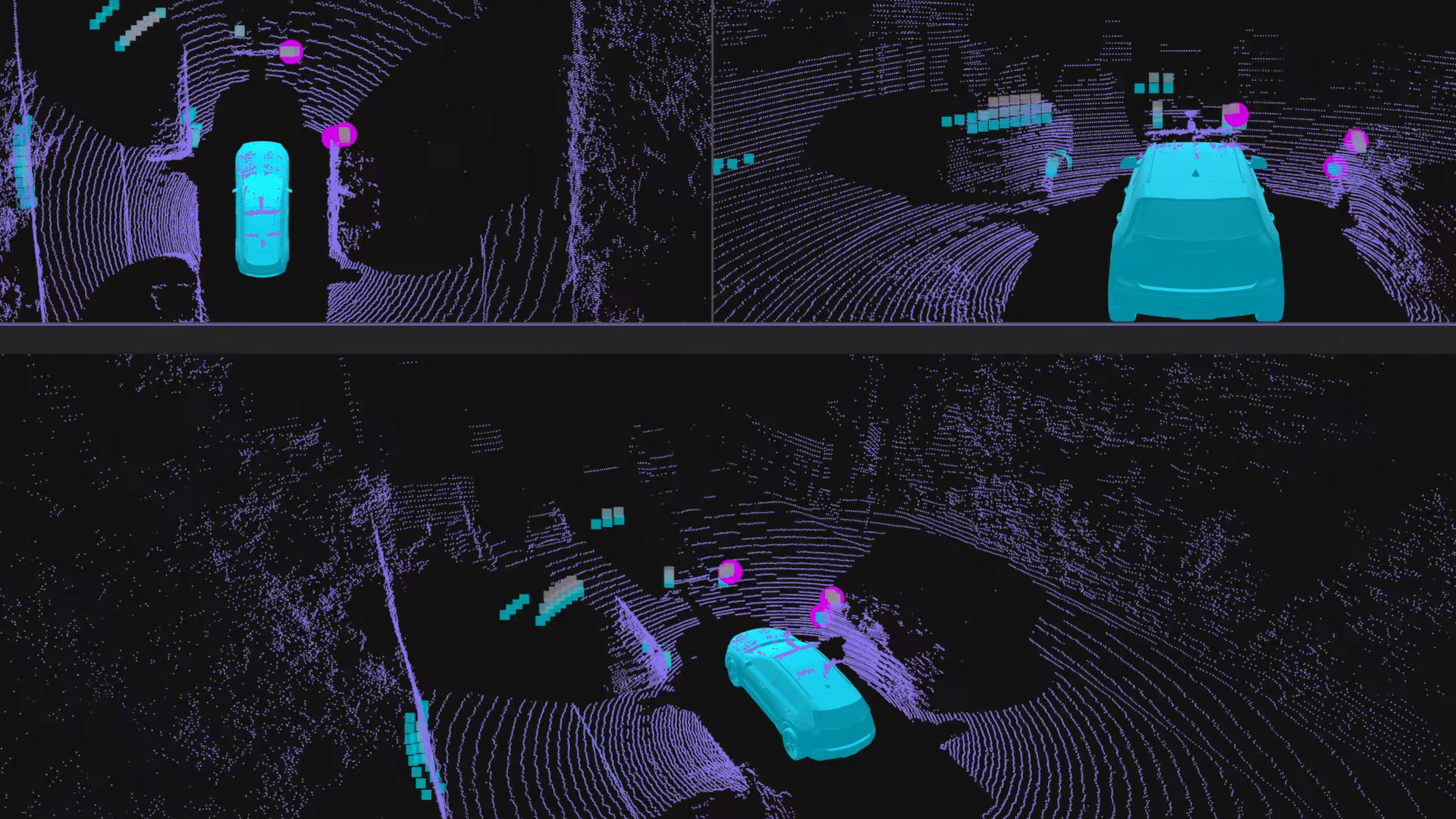
- 3D reconstruction and object detection using video, LiDAR, and ultrasound sensing technologies.
- Multi-source sensor fusion incorporating data from connected vehicles.
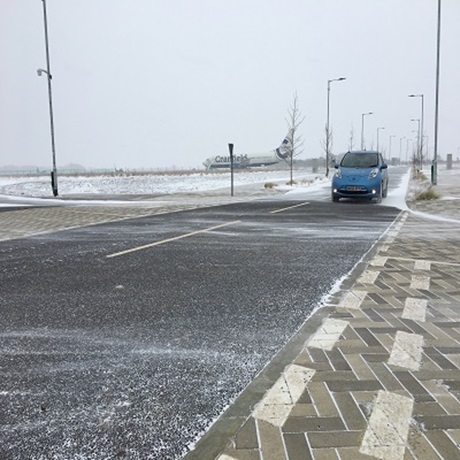
- Robust perception in degraded conditions (e.g. rain, fog, glare).
Planning, control and cooperation - We design algorithms that enable automated vehicles to act safely and effectively, by exploring:
- Decision making and trajectory planning for specific driving scenarios.
- Minimum Risk Manoeuvres under fault conditions.
- Multi-actuator vehicle control for enhanced dynamics and safety.
- Cooperative behaviours between connected vehicles.
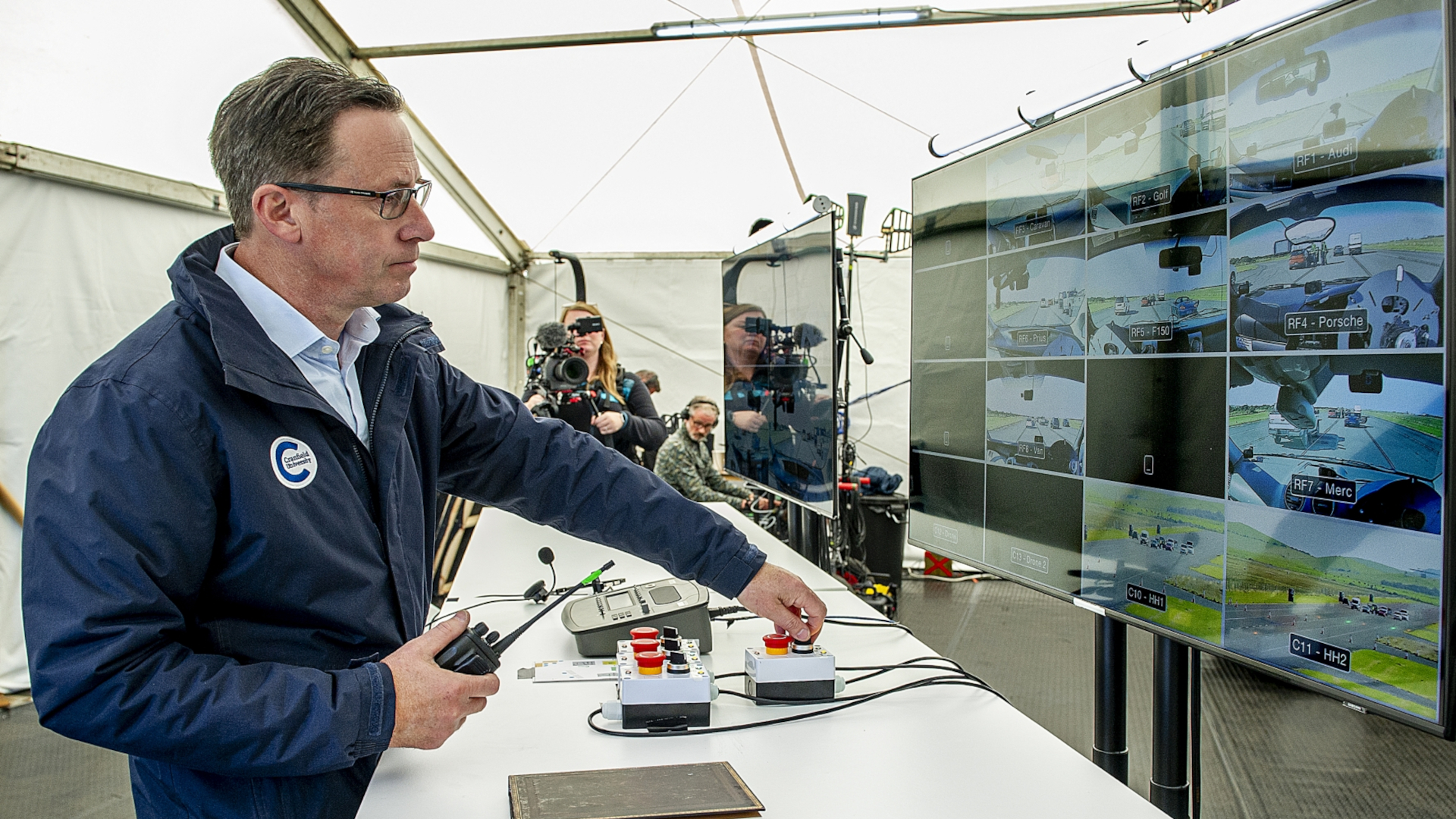
- Remote and teleoperated driving systems.
Understanding the driver - We ensure that automation works safely with human users, providing solutions for:
- Driver behaviour modelling and prediction.
- Monitoring situational awareness and engagement.
- Estimation of comfort and prevention of motion sickness.
- Human–machine interfaces for safe state transitions (for example, between automated and manual driving).
Other related technical capabilities:
- Verification and validation (SIL, MIL, HIL simulation and field testing) of vehicle systems in different driving scenarios.
- Characterisation and modelling of vehicle systems.
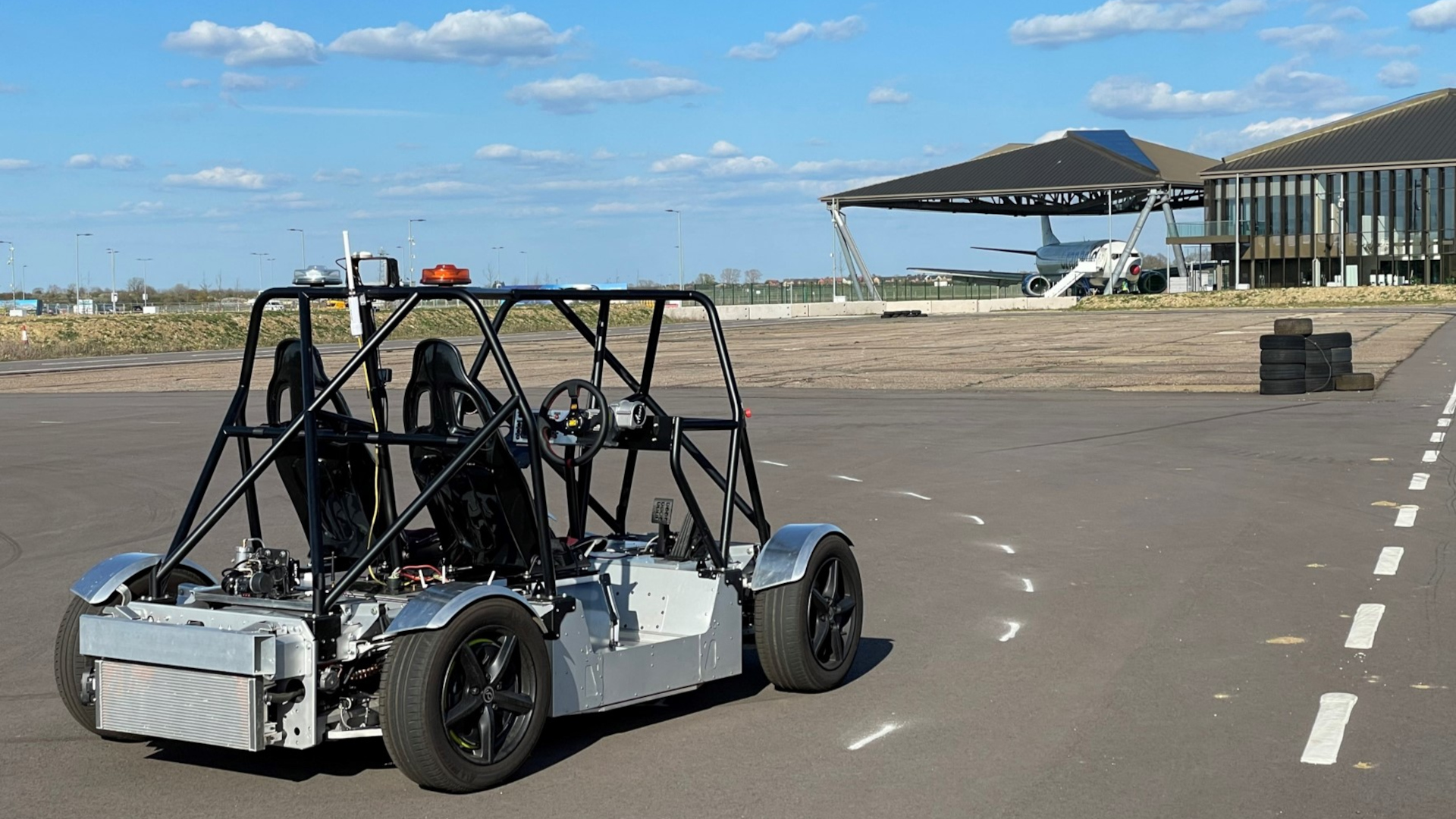
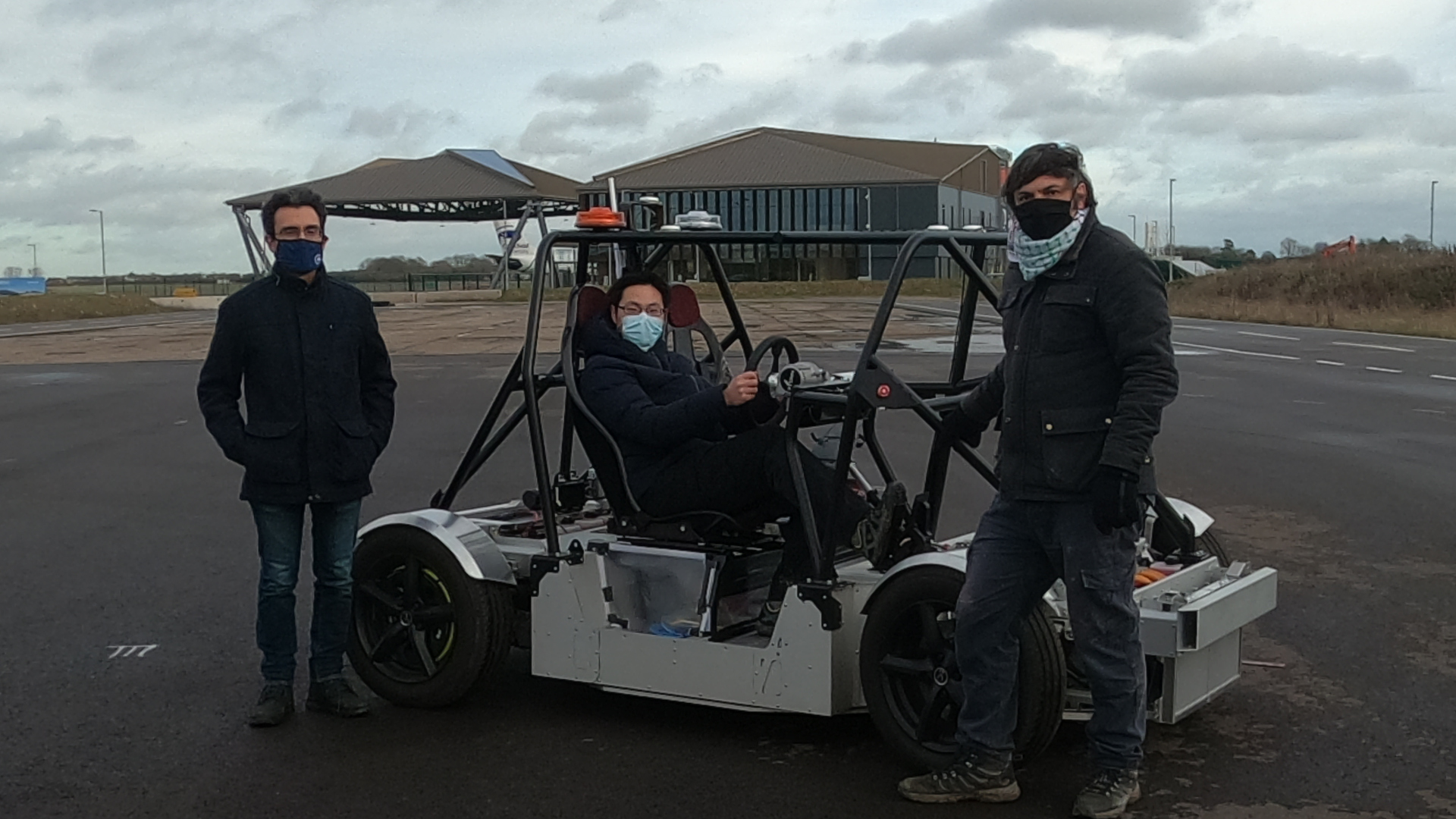
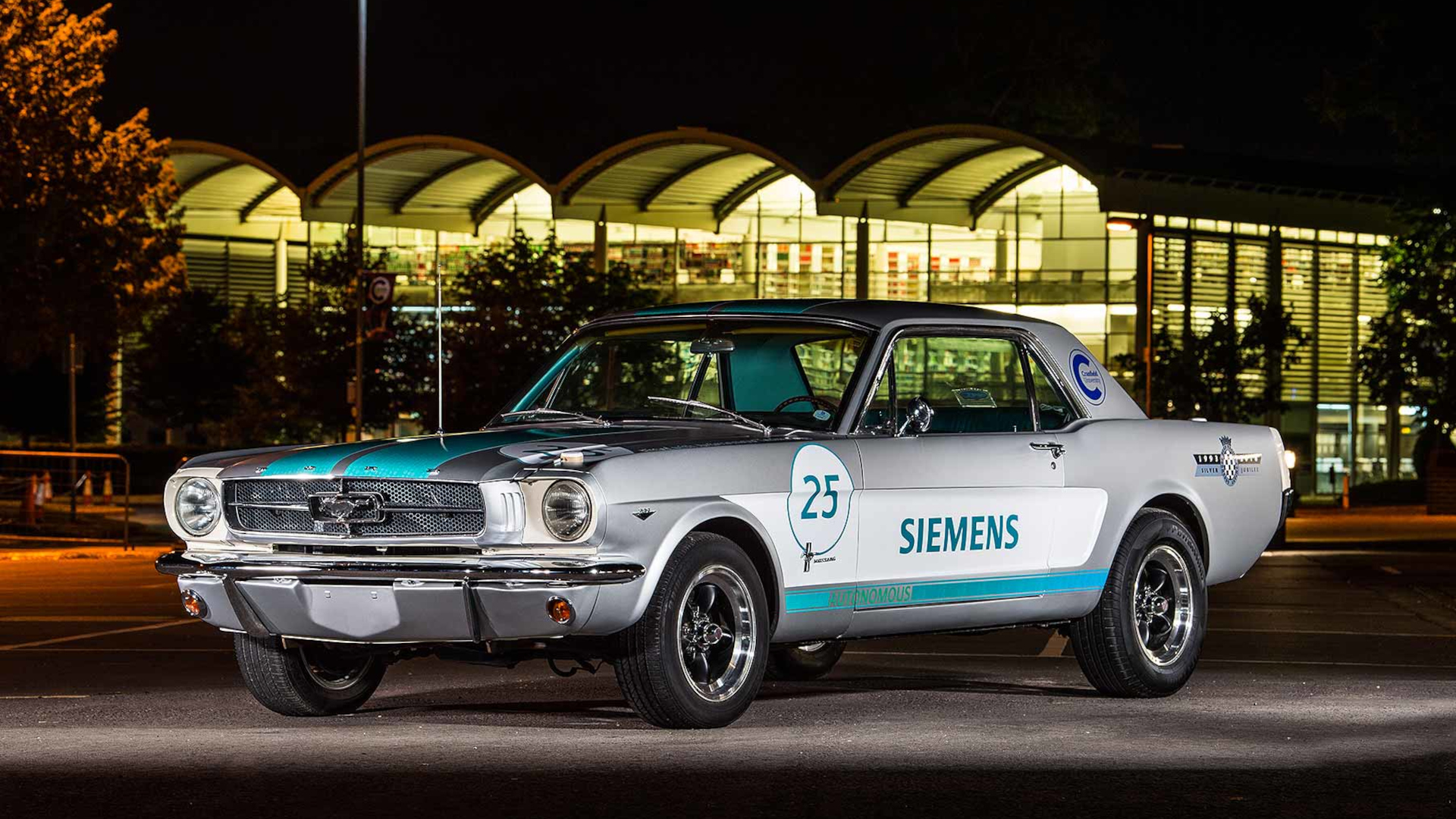
- Prototype build and Drive-by-wire conversion.
- Vehicle teleoperation.
- Fleet management systems.
- Traffic monitoring, modelling, and management.
- Cybersecurity.
- Human-machine interface design.
Our research
Cranfield has a strong track record of delivering large-scale, funded research programmes, working in close partnership with industry and government. Key projects include:
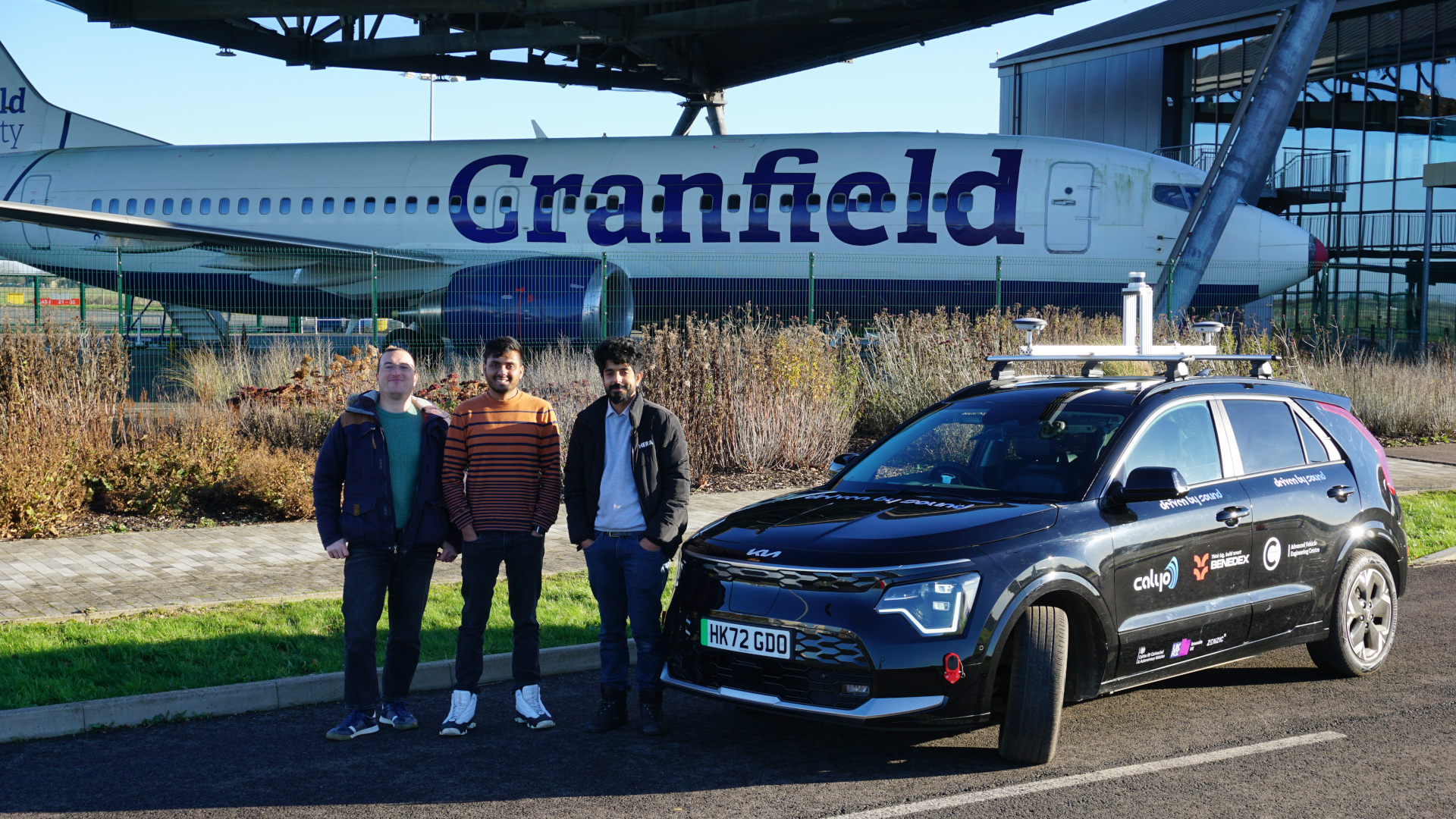
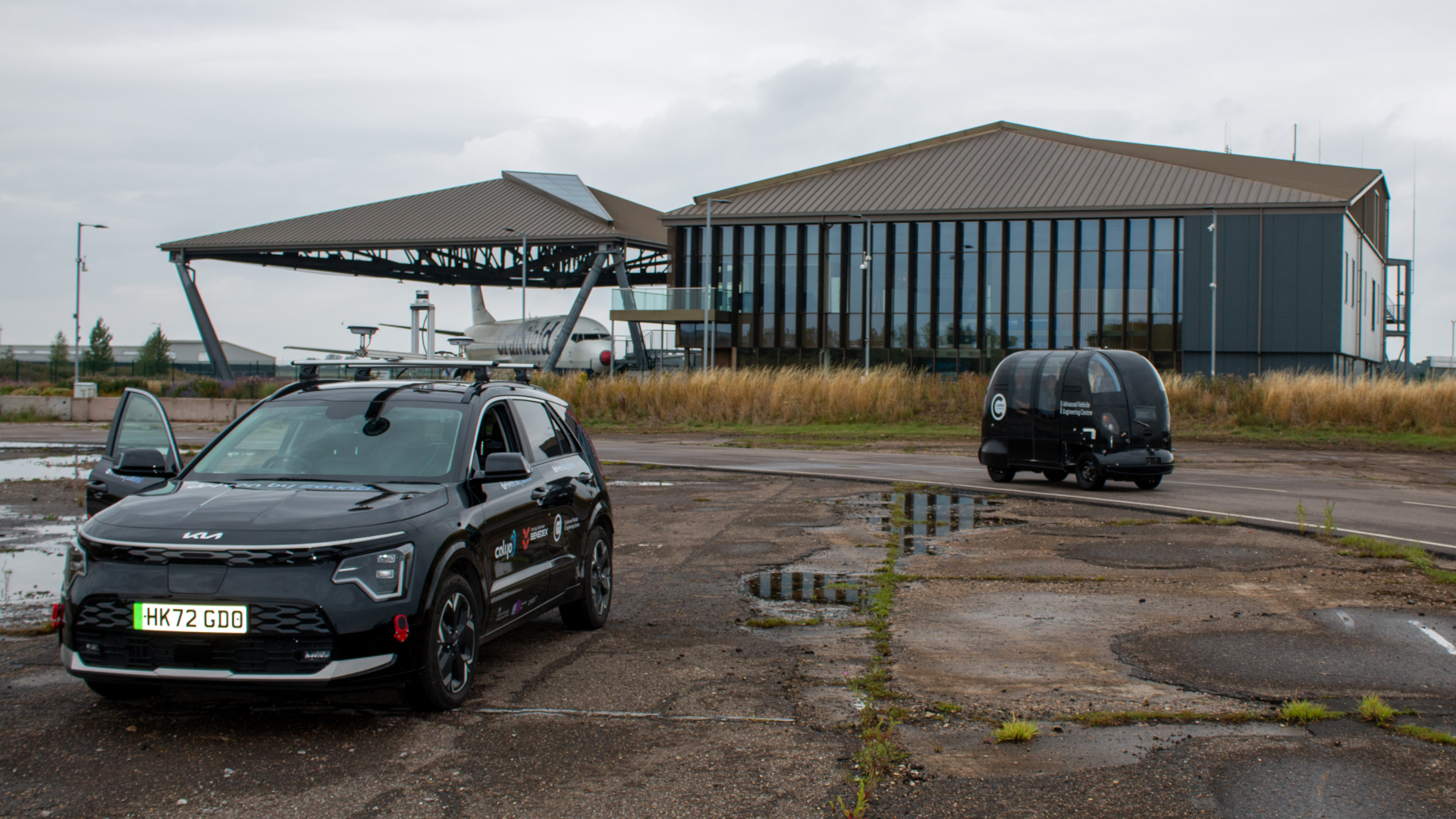
- Driven by Sound (Innovate UK, £1M) - We pushed the boundaries of 3D ultrasonic sensing for automated driving and benchmarked it against state-of-the-art LiDAR systems.
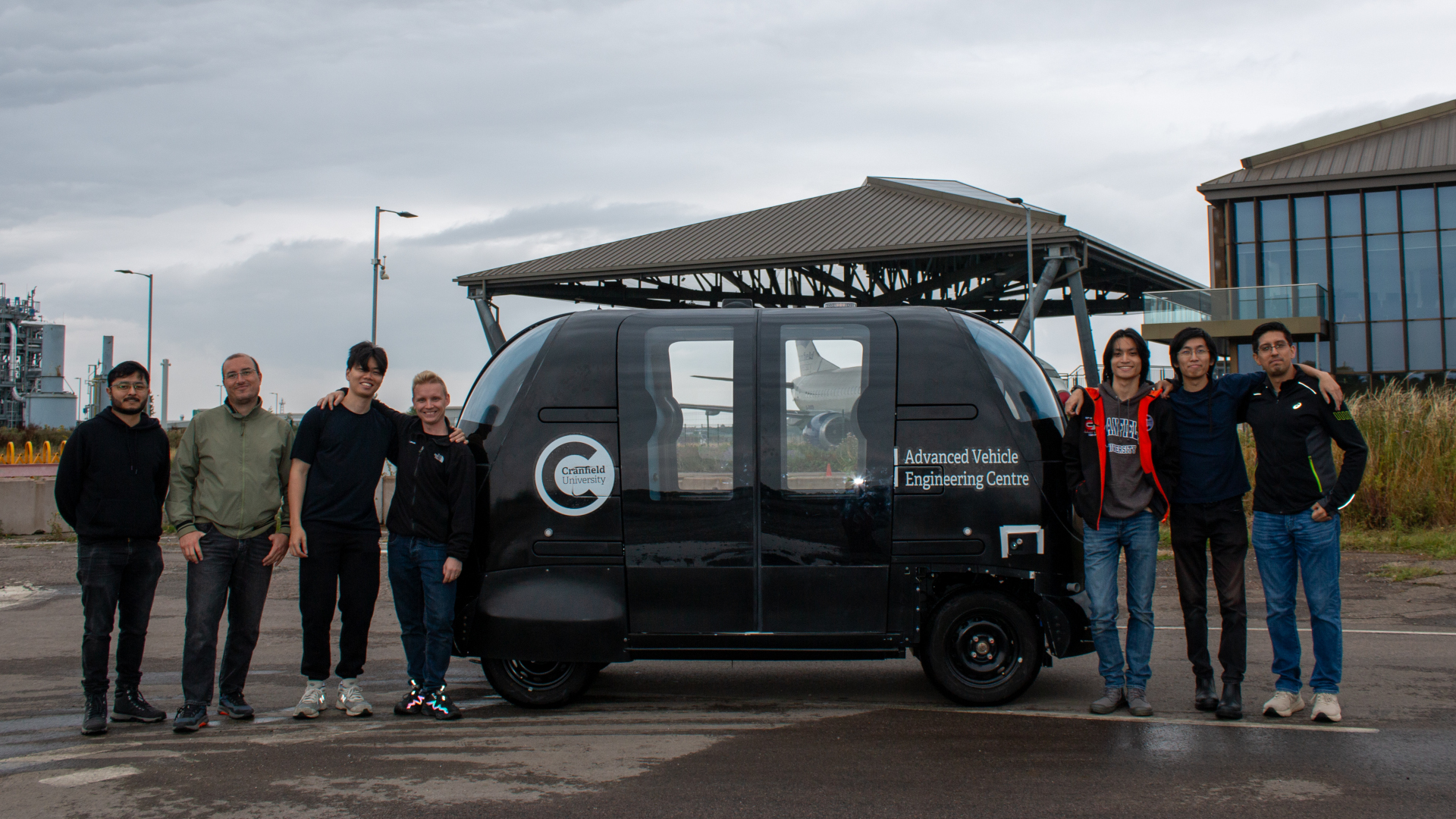
- AID-CAV (Innovate UK, £4.3M) - We optimised the control of multiple actuators across a 5-degree-of-freedom platform (three traction motors and two fully-steerable axes) to achieve safer and faster vehicle manoeuvres.
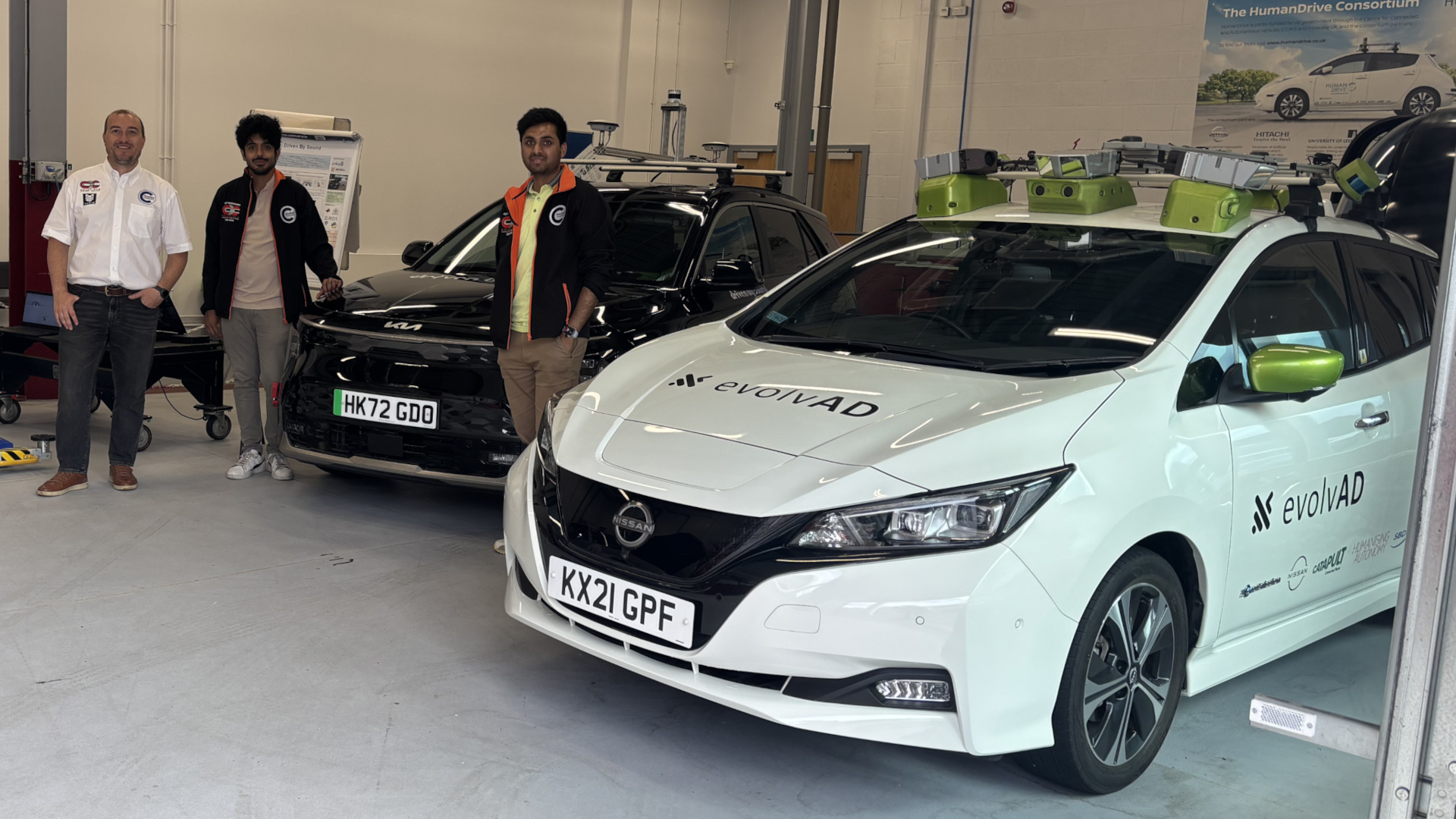
- HumanDrive (Innovate UK, £13.5M) - We modelled and predicted how humans naturally position vehicles on the road, accounting for variation across different road actors and conditions, forming a foundation for human-like autonomous driving behaviour.
- CogShift (EPSRC/JLR, £1.6M) - We focused on monitoring driver awareness and using force-feedback to guide safe handovers between self-driving and human-driving modes.
- MuCCA (CCAV/Innovate UK, £4.6M) We leverage multi-source sensor fusion, including data from connected vehicles, to improve overall perception performance and enable cooperative emergency manoeuvring.
Recent PhD projects have explored:
- A non-linear optimal strategy for simultaneous planning and tracking of autonomous vehicles
- Prediction of Traffic Agents' Trajectories in Urban Scenarios Using Deep Learning
- Path tracking control of a multi-actuated autonomous vehicle at the limits of handling
- Control for motion sickness minimisation in autonomous vehicles
- Driver distraction detection using experimental methods and machine learning algorithms
- Human-like motorway lane change trajectory planning for autonomous vehicles