Newsroom
Aircraft, propulsion and thermal power have been at the heart of Cranfield’s research, innovation and education since the foundation of the College of Aeronautics in 1946. Today, that heritage continues through the Centre for Aeronautics, Propulsion and Power (CAPP), bringing together internationally recognised expertise in aircraft design, aerodynamics, flight dynamics, propulsion systems and sustainable power technologies.
The Centre is one of the largest and most comprehensive aerospace research and education activities of its kind, combining advanced postgraduate education, world-leading research, industrial collaboration, Continuing Professional Development (CPD) and unique large-scale experimental facilities. By integrating airframe and propulsion disciplines within a single Centre, we provide the expertise required to develop the next generation of sustainable, efficient and intelligent aerospace systems.
The Centre's expertise also extends beyond aerospace propulsion to encompass advanced power and energy systems. Building on decades of research in thermal power engineering, we develop technologies that improve the efficiency, reliability and sustainability of power generation across a range of applications, from conventional gas turbines to future low-carbon energy systems. Our research in power addresses the challenges of the global energy transition through innovations in energy conversion, hydrogen and alternative fuels, low-emission combustion, carbon reduction technologies, hybrid energy systems and integrated thermal management.
By combining expertise in aeronautics, propulsion and thermal power, the Centre delivers multidisciplinary solutions that support both the future of sustainable aviation and the wider decarbonisation of energy and transport.
Centre of Excellence in Integrated Aerospace and Power Systems
The Centre for Aeronautics, Propulsion and Power brings together more than 120 academic, research and technical staff, supported by a vibrant community of more than 250 postgraduate and doctoral researchers. Our activities span the complete aerospace engineering lifecycle—from conceptual aircraft design and multidisciplinary optimisation through propulsion integration, testing, certification and operational performance.
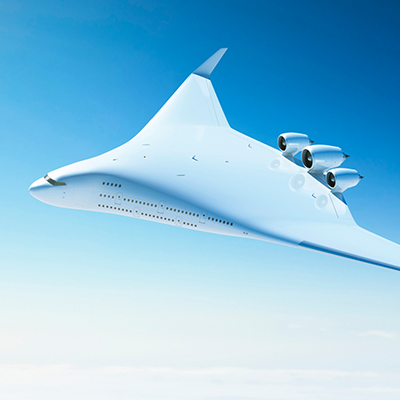
Our research addresses the major technological challenges facing the aviation, aerospace and power industries, including future aircraft architectures, sustainable propulsion, hydrogen-powered flight, hybrid-electric aircraft, advanced gas turbines, thermal management, digital engineering and autonomous systems.
The Centre is characterised by the close integration of education, research and industrial collaboration. Every year we educate hundreds of MSc students from around the world, supervise a large doctoral research community and deliver an extensive portfolio of specialist professional development courses. Students and researchers benefit from direct engagement with leading aerospace companies through collaborative projects, industrial placements and sponsored research.
Expertise and facilities
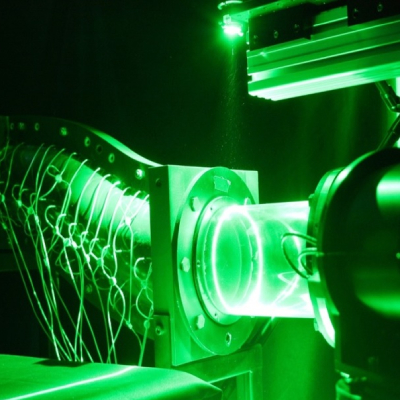
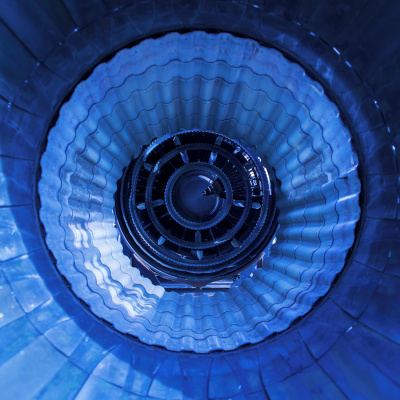
Our researchers are supported by one of Europe's most comprehensive collections of aerospace laboratories and experimental facilities. Together, these facilities enable research from fundamental science through technology demonstration and industrial validation.
Awards and recognition
Our staff and students have received numerous international awards (such as the IMechE Whittle Reactionaries Prize, the Rolls-Royce House-Ruffles Award, the ASME Aircraft Engine Technology Award, the ASME John P. Davis Award, the Alstom Golden Blade Award and several ASME Student Awards), and invitations to deliver keynote and honorary presentations. MSc programme teaching staff and administrators are also regular winners of Cranfield’s annual Student Led Teaching Awards, accredited by the Institution of Mechanical Engineers and the Royal Aeronautical Society.