Today (14 May 2026) King’s College London and Cranfield University have announced the news that the two universities have signed an agreement as the first step towards a merger, with the aim of bringing the two institutions together from August 2027.
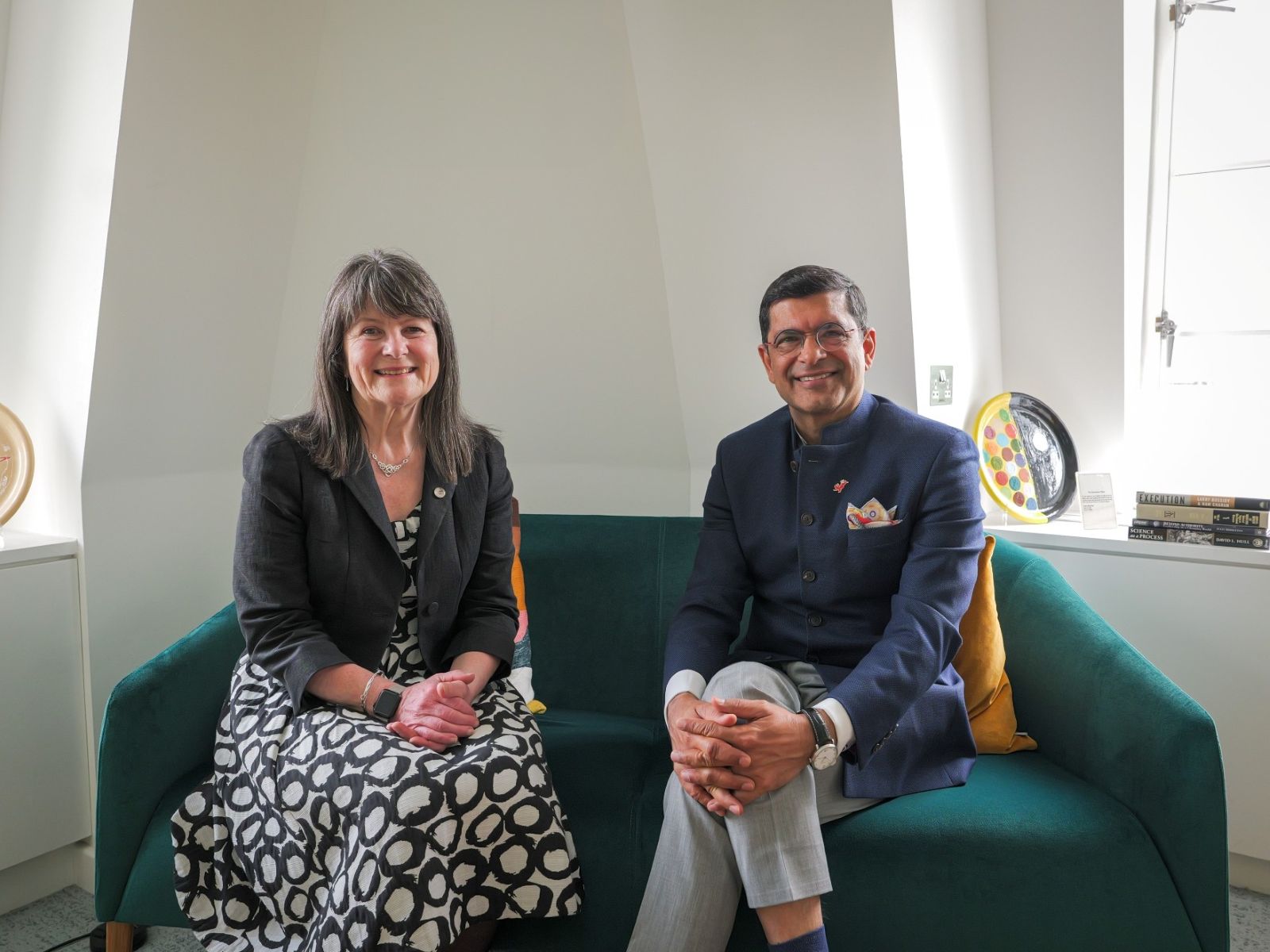
The proposed merger will create a UK university especially equipped for the changing world, with enhanced opportunities and resources for students, a synergy in its disciplinary mix, and a distinctive offer for the UK’s future.
The merger will build on the existing individual strengths of each institution, to support national capability and resilience across:
- Engineering and Technology- aerospace, advanced manufacturing, AI and robotics
- Environment and resources – water, soil, food systems and climate
- Energy – hydrogen, batteries and net zero systems
- Economy, industry and leadership – productivity, skills and innovation
- Society and policy – health and life sciences, regulation and public leadership
- Security and Defence – expertise spanning science, strategy and operations
As a specialist postgraduate university, Cranfield will benefit from the interdisciplinary breadth and scale of King’s. King’s, in turn, will be strengthened by Cranfield’s world-renowned expertise in technology, engineering and management, alongside its deep and longstanding partnerships with industry and government. Cranfield will become part of King’s College London and together we will recognise, celebrate and build on Cranfield’s distinct culture and contribution.
Together we will deliver:
- A globally leading engineering and technology capability aligned with industrial missions and future prosperity.
- A distinctive contribution to national resilience, security and defence.
- Leading business and management education provision spanning undergraduate programmes, MBA and executive education.
- A combined force at the forefront of environmental science and policy with clean-tech, and a particular emphasis on alternative fuels and net-zero transportation.
- Interdisciplinary research that unites the combined strengths of both institutions from engineering, technology and environmental sciences to health, social sciences, arts and humanities, to address complex challenges.
This will be supported by a combined footprint spanning London and the Oxford-Cambridge Growth Corridor, one of the UK’s key centres of knowledge and economic activity, strengthening our ability to work in partnership across research, industry and government.
“The combination of Cranfield and King’s creates an extraordinarily powerful university. It holds huge potential for the Oxford-Cambridge Growth Corridor and for wider UK research capability and training, bringing together two world-class institutions and giving King’s a place at the heart of one of our most important regions for science and technology.
“It will create a driver of innovation and growth, capitalise on the complementary strengths and specialisms of both institutions and increase access, capacity and resilience across teaching and research.”
“The UK’s universities are among our greatest strategic assets; engines of innovation, educators of future talent, and central to how the country responds to the challenges ahead.
“This proposed merger will bring together the complementary strengths of two institutions - both founded with a particular emphasis on service to society. The merger would bring new educational possibilities for students, new discoveries from academics and a clear focus on working in partnership with industry and government to support national resilience. This is a deliberate step to bring some of the best of UK to compete with the best in the world.”
“This merger is an exciting proposition for Cranfield, aligning our deep specialisms in engineering, technology, and management within King’s College London. It is an intentional step, which brings Cranfield University’s outstanding applied research, nationally important facilities, sovereign capability, and long-standing industry links to King’s, creating enormous potential and continuing our mission to tackle real-world issues.
“In merging, we build on the strengths of Cranfield and King’s to embed our shared ethos of truly working in the service of society. Together we will create a global university that is not only committed to excellence, but delivers it with purpose, drive, and scale”.
"Bringing Cranfield into King's College London has the potential to be a genuine 'win-win' for both universities, unlocking major new opportunities for our world-leading research, teaching and industry-facing innovation. For the UK, it also creates new opportunities to deepen and extend capabilities so critical to our future, including applied engineering, novel environmental technologies, and national security and resilience."
“This is a bold and inspiring move that will create a unique university capable of addressing the challenges of today’s world and our future. Cranfield is a leader in its specialist areas, and this development brings opportunities to build that even further. The combined university will be in a great position to harness our deep expertise, unique facilities, and long-standing industry relationships.”
Notes for editors
About King’s College London
King’s College London is amongst the top 35 universities in the world and 5th best in the UK (QS World University Rankings 2026), and one of England’s oldest and most prestigious universities. With an outstanding reputation for world-class teaching and cutting-edge research, King’s maintained its sixth position for ‘research power’ in the UK (2021 Research Excellence Framework).
King's has more than 42,000 students (including more than 12,800 postgraduates) from some 190 countries worldwide, and 8,500 staff.
For almost 200 years, King’s has been a place where ideas turn into action. From revealing the structure of DNA to reimagining nursing, from advances in medicine, law and the study of war and peace to shaping culture and public debate, our work has always been guided by a belief that knowledge should serve society. Over our history, King’s has been home to 14 Nobel Prize winners, and to scholars whose ideas and leadership have shaped thinking, policy and practice around the world. King’s has always been a place where knowledge is put to work for the benefit of others. Visit the website to find out how we are taking that purpose forward through Strategy 2030. https://www.kcl.ac.uk/about/strategy
About Cranfield University
Cranfield is a world-leading specialist postgraduate university with globally renowned expertise in science, technology, engineering, and management. We deliver applied research that has real-world impact – 88% of our research is world-leading or internationally excellent (REF2021).
Our innovative education is enhanced by large-scale facilities and global industry partnerships. Cranfield is one of the few universities in the world to have its own airport – our global research airport is a unique environment for research. We are a six-time winner of the prestigious Queen’s Anniversary Prize, the highest national honour for educational institutions.
Cranfield formed in 1946 as the College of Aeronautics, the first postgraduate college of its kind. The School of Management was founded in 1967.
