Contact Mansher Gill
Background
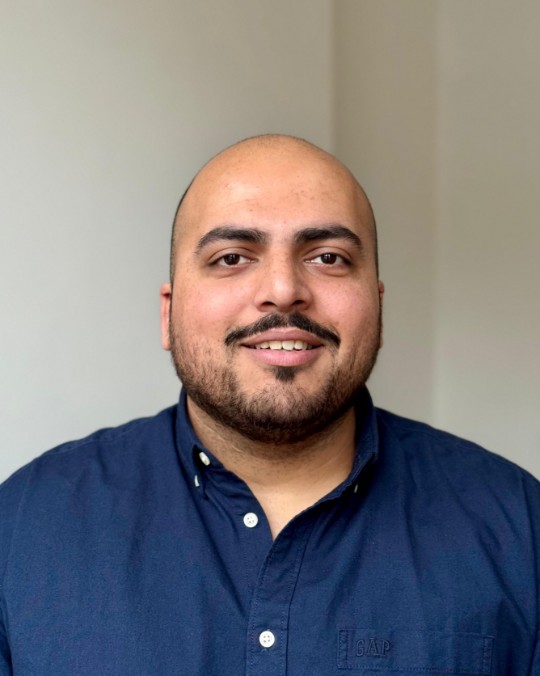
Mansher Singh Gill is a software engineer and research assistant in artificial intelligence and smart automation at Cranfield University, possessing over five years of experience in mission-critical systems development across defense, academic, and industrial domains. His research focuses on human automation teaming (HAT) and human-robot collaborative systems with emphasis on verification and validation activities for safety-critical, trust centered systems.
Mansher earned his MSc in Software Engineering from Cranfield University, completing specialized modules in software testing and quality assurance, requirements analysis and systems design, high performance technical computing and cloud computing. He holds a BEng in Information Technology from Panjab University, with foundational expertise in computer architecture, distributed systems, communication systems, network security, and database management.
His primary research investigates trust dynamics in human-automation interaction through multimodal physiological monitoring, integrating infrared spectroscopy (fNIRS) neuroimaging, cardiac activity monitoring, and oculometric data. This research work encompasses experimental design, ETL pipeline development for multimodal data streams, data processing and validating the data for trust metric extraction. Verification activities include signal quality validation, cross-modal temporal synchronization testing, and statistical validation against established psychometric instruments.
Concurrently, Mansher architected SAFSHARC—a multimodal intelligent framework for situational awareness in human-robot collaborative environments at the Intelligent Robotics Laboratory, Aerospace Integration Research Centre. The system implements hierarchical sensor fusion integrating custom-trained YOLO computer vision pipelines achieving 94% detection precision.
Prior to Cranfield, Mansher served as Senior Solutions Engineer at Mystic Works LLP, Mansher architected software systems for unmanned vehicle simulation prototypes, authoring Software Design Documents, System Requirement Specifications, and implementation plans.
As Software Engineer at WESEE (Ministry of Defense, India) for three years, leading development of platform-independent communication systems supporting multimodal interactions via WebRTC and XMPP protocols. He engineered real-time GIS-based visualization platforms with secure network transmission employing hardware encryption modules for mission-critical operations.
At L&T Heavy Engineering, he developed full-stack supply chain management solutions integrating machine learning capabilities including voice recognition-based form filling, achieving 40% efficiency improvement.
His research interests span human-automation teaming, multimodal physiological measurement, real-time sensor fusion architectures, computer vision for safety-critical systems, and verification methodologies for human-robot interaction.
Research opportunities
Mansher's research interests converge at the intersection of human factors engineering, intelligent automation, and safety-critical systems development. He maintains particular focus on Human-Robot Interaction (HRI) and Human-Automation Teaming (HAT), investigating how physiological and cognitive metrics can inform adaptive automation design and trust calibration in collaborative operational environments. This extends to broader human factors in automation research, examining workload distribution, situational awareness, and decision-making dynamics under varying automation reliability conditions.
He is deeply invested in artificial intelligence and machine learning methodologies grounded in practical applicability—emphasizing realistic machine learning approaches that account for deployment constraints, data quality limitations, and operational robustness.
His technical interests encompass full-stack development across diverse technology stacks, enabling end-to-end system realization from backend infrastructure through frontend visualization interfaces. He maintains active interest in emerging computational paradigms including Quantum Computing and its potential applications in advanced computations, cryptography, and machine learning acceleration. Additionally, he follows developments in artificial general intelligence (AGI) research, particularly concerning safety frameworks.
Current activities
Mansher is currently engaged in two research streams at Cranfield University.
The first involves architecting SAFSHARC—a multimodal intelligent framework providing real-time situational awareness for human-robot collaborative environments. The system implements hierarchical sensor fusion processing concurrent data streams: multiple camera feeds undergo inference through custom-trained YOLOv8 models optimized for manufacturing contexts, with detections propagated through tracking and prediction algorithms. Robot movement streams, human participant skeletal pose estimation and human participant eye gaze and attention data are temporally correlated to support decision making and alert generation. Risk assessment modules implement predictive collision modeling with sub-100ms end-to-end latency, generating safety alerts.
The second research stream investigates trust dynamics in human-automation interaction through multimodal physiological monitoring. Experimental tasks manipulate automation reliability while participants undergo concurrent fNIRS neuroimaging, cardiac monitoring through heart rate sensors, and oculometric assessment via eye-tracking instrumentation. The current work encompasses developing ETL pipelines, processing data, multimodal data fusion and developing a smart model trained on the data collected that is capable of measuring trust of human operators while engaging with an automated system.
Clients
- Airbus SE