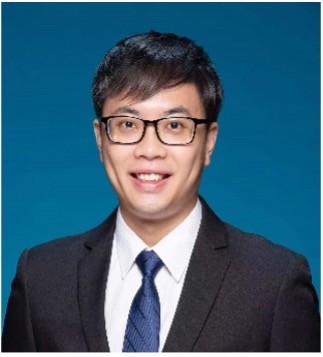
Contact Dr Haoxiang Wu
Background
Dr Haoxiang Wu is currently an Assistant Professor (Lecturer) in Indoor and Environmental Mycology at the Magan Centre of Applied Mycology (MCAM), Cranfield University. Before joining Cranfield, he served as a Lecturer in the Department of Biology at Hong Kong Baptist University for five years (2020–2025).
Dr Wu has extensive research experience and expertise in mycology and aerobiology. He obtained his PhD in Indoor Mycology and now leads the Indoor and Environmental Mycology Research Group at MCAM, Cranfield University. His research focuses on understanding how indoor fungi respond to dynamic environmental conditions and on developing novel strategies to prevent fungal growth in indoor environments. In addition to his work in mycology, Dr Wu conducts research in aerobiology, investigating the mechanisms that regulate how airborne microorganisms respond to varying environmental factors such as temperature and relative humidity. His work also explores synergistic disinfection approaches for airborne microbes and elucidates their underlying mechanisms. To date, Dr Wu has published over 10 papers in international peer-reviewed journals, with approximately 70% appearing in top-tier journals in the field. He actively contributes to the academic community as an Editorial Board Member, Guest Editor, and Reviewer for several reputable journals.
Beyond academia, Dr Wu is also passionate about industry collaboration and community engagement. He has partnered with industrial companies on multiple projects, including those focused on in-car air quality and the microbial communities of soy sauce products. He is dedicated to science communication, sharing knowledge about mycology and aerobiology through television programmes and media interviews.
Research opportunities
- Indoor Mycology
- Aerobiology
- (Synergistic) Disinfection of microbes
Dr Haoxiang Wu has recently joined MCAM and is in the process of establishing his research team. As the first step in building his team, Dr Wu is seeking a postdoctoral researcher and self-funded PhD students. The postdoctoral candidate should have a strong background in molecular mycology and be proficient in techniques such as RNA sequencing, bioinformatics analysis, gene manipulation, and microscopy (including confocal, SEM, TEM and cryo-EM). Students with a strong interest in mycology and relevant laboratory experience are encouraged to discuss PhD opportunities.
Current activities
Dr Haoxiang Wu's research work focuses on understanding how fungi respond to ambient environmental conditions - particularly transient moisture - and the underlying mechanisms driving these responses. In addition, he conducts research on aerobiology, where he studies how microbes respond to varying atmospheric conditions and airborne disinfection of microorganisms and plans to integrate fungal investigations into this area as well.
There are some specific research questions that Dr Wu is interested in looking into:
- Mechanisms regulating the responses of indoor moulds to wet-dry cycles
- Mechanisms of airborne survival of microbes under various conditions
- Synergistic disinfection of airborne microbes by different disinfection technologies such as UV(C), air ions...
- Novel strategies for preventing pathogenic microbes in indoor environments
As for teaching, Dr Wu currently serves as the Programme Lead of the Indoor Mould Hygiene Training Hub. He is responsible for the design, development and revamp of training sessions as well as adminstrative affairs relevant to the Training Hub.
Clients
- Research England
- UK Research and Innovation
Publications
Articles In Journals
- Wu H, Lu Y, Wang R & Lai ACK. (2024). Synergistic Disinfection by 222 nm Far-UVC and Negative Air Ions of Airborne Bacteria and the Induced Oxidative Stress Responses: A Bioaerosol Chamber Study. ACS ES&T Air, 1(12)
- Lu YH, Wu H, Zhang HH, Li WS & Lai ACK. (2023). Synergistic disinfection of aerosolized bacteria and bacteriophage by far-UVC (222-nm) and negative air ions. Journal of Hazardous Materials, 441
- Chan WL, Luo L & Wu H. (2023). The role of hygrodynamic resistance compared to biofilm formation in helping pathogenic bacteria dominate air-conditioning units recovered from odour problems. Environmental Technology, 44(7)
- Wu H & Wong JWC. (2022). Mechanisms of indoor mold survival under moisture dynamics, a special water treatment approach within the indoor context. Chemosphere, 302
- Wu H & Wong JWC. (2022). Temperature versus Relative Humidity: Which Is More Important for Indoor Mold Prevention?. Journal of Fungi, 8(7)
- Barnes NM & Wu H. (2022). Mechanisms regulating the airborne survival of Klebsiella pneumoniae under different relative humidity and temperature levels. Indoor Air, 32(2)
- Wu H & Wong JWC. (2020). Current challenges for shaping the sustainable and mold-free hygienic indoor environment in humid regions. Letters in Applied Microbiology, 70(6)
- Wu H & Wong JWC. (2020). The role of oxidative stress in the growth of the indoor moldCladosporium cladosporioidesunder water dynamics. Indoor Air, 30(1)
- Wu H, Ng TW, Wong JWC & Lai KM. (2018). Environmental Sustainability and Mold Hygiene in Buildings. International Journal of Environmental Research and Public Health, 15(4)
- Ng TW, Chan PY, Chan TT, Wu H & Lai KM. (2018). Skin squames contribute to ammonia and volatile fatty acid production from bacteria colonizing in air-cooling units with odor complaints. Indoor Air, 28(2)